Israel’s plot to turn Lebanon into a failed state is decades in the making, but the methods with which it is now aiming to do so are new and frightening. If Israel continues on its current trajectory, the Gaza strategy may be enacted on a Lebanese population—which is much larger in size—in addition to an attempt to sow civil war.
Despite agreeing to a 10-day temporary Lebanon ceasefire on April 16, the Israeli military has continuously violated the truce by launching constant artillery attacks and advancing further into the south of the country, where its forces’ main task has been demolishing civilian homes and infrastructure.
Within hours of the ceasefire, Israel published a warning to residents of the south that they cannot return to their homes and could become potential targets if they do. This was specifically addressed to those attempting to cross the Litani River area. In total, around 1.3 million people have been displaced as a result of the Israeli aggression on Lebanon, the majority of whom are from the Shia community within the country.
Israel has developed a strategy that involves threatening every single majority-Shia area inside Lebanon, including the southern suburbs of Beirut (Dahiyeh). In the south of Lebanon, Israel has illegally occupied what it claims are some 55 villages and their surrounding areas, yet the real number is over 70.
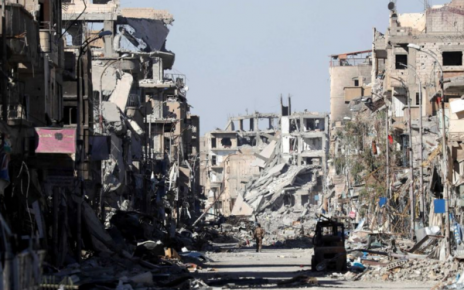
In these areas, which Tel Aviv is calling its new “buffer zone,” the Israeli military has moved quickly into villages using heavily armored vehicles, demonstrating little concern for civilian casualties, while attempting to avoid clashes with Hezbollah. Their intention is to occupy key buildings, from which they coordinate the illegal detonation of entire civilian neighborhoods. Realistically, the so-called “buffer zone” does not provide any of the alleged “security” benefits that the Israeli government claims it seeks.
Hezbollah still possesses the capability to fire upon the northern Israeli settlements that Israel claims to be defending by operating in Lebanon. This has drawn outrage from Israeli border communities. Instead of providing security, the operation has driven out nearly the entire population in these southern villages in order to destroy their homes and ethnically cleanse them permanently.
Another element of the Zionist strategy has been to attempt to divide the population along sectarian lines. While displacing Shia Muslims, the Israelis have specifically spared Christian and Druze villages, but only on the condition that they not shelter Shias. The goal is to force other communities to turn away Shia civilians seeking refuge, thereby creating sectarian hatred on both sides.
For example, on April 6, an Israeli strike targeted the Ain Saadeh area east of Beirut, killing Pierre Mouawad, a local official with the Lebanese Forces—a Maronite Christian political party that is staunchly opposed to Hezbollah. The strike was carried out because Christians in the area were sheltering displaced Shias. Predictably, as a result of the attack—which the Israelis claimed was a mistake and that they sought to target the Shias in the area—members of the Lebanese Forces Party began their own attempted Shia sectarian purge. Some Christian areas even began running regular patrols to make sure displaced Shias would not enter their neighborhoods and put them at risk.
Groups of Israeli citizens have also been calling for the establishment of settlements in southern Lebanon, with some providing detailed plans, while others have protested along the border and sought to begin constructing settler outposts.
The Movement for Settlement in Southern Lebanon published this map, featuring “The new Hebrew names for the settlements of Southern Lebanon” based on the current names of the Lebanese towns and villages. https://t.co/QmyW5XEbxZ pic.twitter.com/359Yoynex1
— B.M. (@ireallyhateyou) September 24, 2024
The outpost strategy mirrors what the Israelis do in the West Bank when they seek to steal Palestinian lands: they arrive in an area without the government’s explicit approval, live in mobile homes, and receive the backing of the occupying army to live there illegally.
I literally had to go see this for myself. Sure enough. Apple Maps has removed almost every town in Lebanon from the map while keeping every podunk town in Israel and Syria clearly marked. https://t.co/gD7xGjEThN pic.twitter.com/UfUJKU5gcK
— Mel (@Villgecrazylady) April 12, 2026
Civil War, Ethnic Cleansing And Genocide
The Israeli government is refusing to back down from its declared intention of seizing a large portion of southern Lebanon. Soon after the ceasefire was announced, Israeli PM Benjamin Netanyahu announced that Tel Aviv had “not yet finished the job” in Lebanon.
One of the primary tactics at play is to use the current Lebanese government, headed by Prime Minister Nawaf Salam and President Joseph Aoun, to drag the nation to a catastrophic civil war. Neither of these politicians was elected by the people; instead, they were internally selected and were the US government’s top picks.
Instead of addressing Israel’s war crimes in Lebanon, the Lebanese government has pursued direct negotiations with the Israelis to achieve a normalization deal. Despite around 2,300 of their people having been killed, with ambulances, schools, churches, mosques, medical clinics, and other civilian infrastructure being targeted, the US-backed leaders in Beirut are spending their time posing as brave for standing up against Hezbollah—the one group defending the country.
Last August, the Lebanese government adopted a plan sent to them by the US to disarm Hezbollah. They are now aggressively attempting to implement that plan, while the Commander of the Lebanese Army, Rodolphe Heikal, is the only thing standing in their way.
The current head of the Lebanese Armed Forces has vowed not to order his men to go after Hezbollah while the Israelis are attacking and invading the country—a stance that has triggered US Senator Lindsey Graham to call for his ousting.
Commander Heikal likely knows that if the army is ordered to violently go after Hezbollah’s weapons, not only will the group fight back (as it is more powerful than the Lebanese Army), but a very large percentage of the armed forces are likely to break ranks and side with Hezbollah.
Therefore, the Israeli plot would have to include contingencies, such as using the Lebanese Forces militias and perhaps the Syrian militant groups loyal to Damascus across the border as well. The goal of whipping up sectarian tensions inside the country has been crucial to this.
As has been shown repeatedly, the Israelis will also implement their infamous Dahiyeh Doctrine—that is, they will indiscriminately carpet-bomb entire residential buildings to the ground. This is precisely what happened in Beirut less than twenty-four hours after the Iran-US ceasefire was declared, where the Israeli Air Force killed around 300 civilians in only 10 minutes. If such bombing raids are repeated more frequently, the casualty count in Lebanon could rise into the tens of thousands.
Tel Aviv also has a history of sowing such large-scale death and destruction across Lebanon while targeting a specific civilian population, as it did during the 1982 war of aggression. At the time, Israel killed around 20,000 Palestinians and Lebanese. The Israelis also targeted Palestinians in a similar way to how they target Lebanese Shias today, attempting to stir animosity and division among communities in the hope that this will turn into armed conflict.
This may all appear appetizing to the Israelis, who have openly been speaking about sparking civil war in their Hebrew-language media, although it could enormously backfire if they are not careful. During the temporary ceasefire, Hezbollah managed to adapt, waging a guerrilla-style war on the occupying army in retaliation for Israeli truce violations.
If a civil war is to be encouraged, the potential repercussions could involve Hezbollah taking over the entire country, while the ground invasion may become so costly that it forces Israel to retreat once again, as they did in 2000. The maximum they could hope to achieve is Lebanon’s collapse, meaning a flood of refugees will arrive in Europe and the country will end up like Libya or Syria. Although it appears this will not be the outcome—instead, Hezbollah will continue to resist, meaning Israel will be more predisposed to lashing out at civilians after failing militarily.