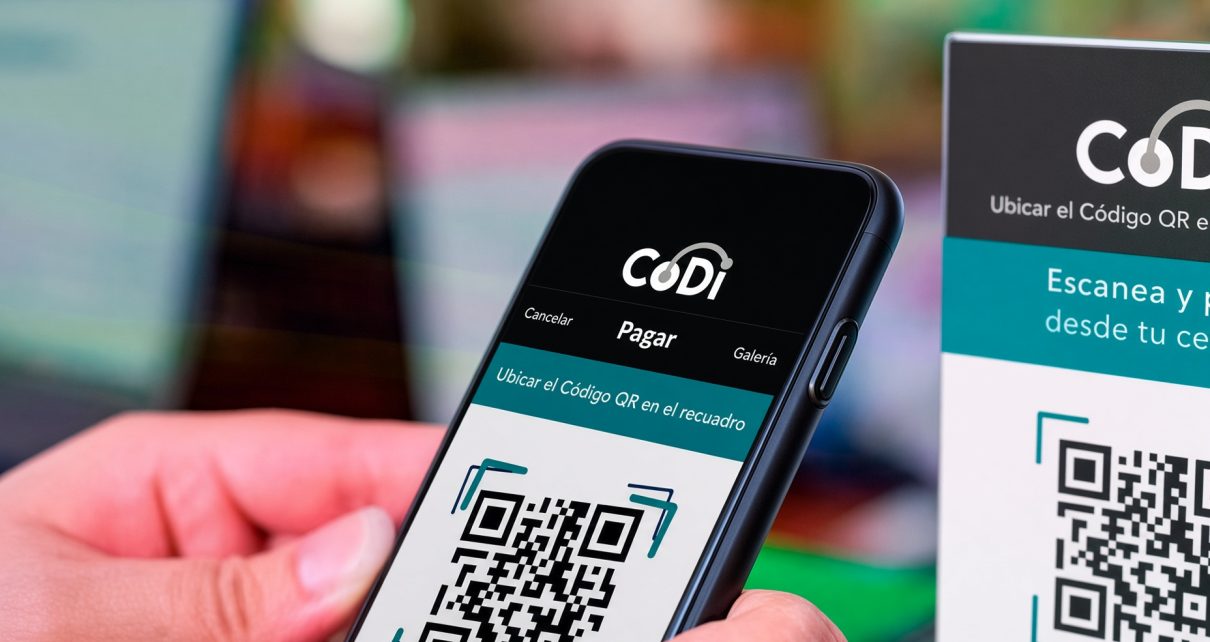
Will an effort to limit and eventually ban cash payments work in a nation where 80 to 90 percent of payments are made in cash?
On Wednesday, the Mexican government inched closer to passing a law that would begin the process of phasing out cash payments and requiring digital payments.
The “Digital Economy Law” was first introduced by President Claudia Sheinbaum in early September and has since moved rapidly through official commissions and the Chamber of Deputies. Most recently, on October 14, the bill passed out of two Senate commissions and now awaits a full Senate vote in the coming weeks.
The bill is part of an ongoing effort by the Sheinbaum government and the Morena party to expand the digitization of Mexico’s economy. It instructs Mexico’s Ministry of Finance and Public Credit (SHCP) to designate which business sectors will eventually only accept digital and electronic forms of payment.
While Mexico already has existing digital infrastructure, such as the SPEI (Sistema de Pagos Electrónicos Interbancarios) and the CoDi and DiMo networks, the public’s embrace of these systems has been slow. The Digital Economy Law is aimed at increasing the use of such digital payment platforms.
However, in a country where somewhere between 80 and 90 percent of all transactions are done in cash, it remains to be seen how the law will be implemented and enforced. Some critics of the bill have argued that the language of the bill does not make it clear which types of businesses will be compelled to only accept digital payments.
Meanwhile, Sheinbaum and her party allies have said the measures will make life easier for Mexicans because “they do not have to bring cash” and will “be able to pay from the cell phone or through other mechanisms directly.”
At a press conference on September 24, Sheinbaum discussed the effort to limit the use of cash as she officially introduced the Digital Economy Law. Sheinbaum and the Morena Party claim the law will “help security, efficiency, and the formalization of shops and products by digitizing payments and reducing the use of cash.”
José Antonio Peña Merino, head of the Digital Transformation and Telecommunications Agency (ATDT), also spoke at the press conference and explained that the new Digital Economy Law will help accelerate digital payments. He noted that the Mexican government has already begun efforts to reduce the use of cash in “strategic sectors” such as gas stations and toll booths.
The Effort to Limit Cash Advances
After Sheinbaum’s introduction of the bill, the government has worked quickly to pass it into law. On October 1, the bill advanced in the Finance and Public Credit Commission of the Chamber of Deputies with 24 votes in favor and 4 against.
Héctor Saúl Téllez, deputy of the opposition National Action Party (PAN), said the bill gives “absolute and discretionary power to the Ministry of Finance to decide where to ban cash, without clear criteria” and transfers the “excessive costs” to Mexican families and businesses.
Only five days later, the bill was approved by the full Chamber of Deputies. During debates about specifics, language was added that made it clear that cash or check payments will be allowed if a situation arises where it is impossible to receive digital payments, such as a power outage. Some opposition party members also expressed their concern about the law during the vote.
This was followed by another vote on Wednesday, when the Senate’s joint commissions (United Economics and Legislative Studies Commissions) also approved the bill.
Emmanuel Reyes Carmona, president of the Economic Commission, reportedly noted that the implementation of the new bill should not be interpreted as the immediate elimination of cash, but as establishing a legal framework to progressively expand the adoption of digital payments.
The full Senate is expected to debate and vote on the bill in the following week. With the Morena Party’s current majority, it is likely to pass. It will then be sent to President Sheinbaum for her signature before it is published in the Official Journal of the Federation (DOF).
According to the latest text of the bill, once the bill is signed and published it will become law. Within fifteen business days after the law enters into force, the Ministry of Finance and Public Credit must publish the “strategic sectors and relevant activities” in which digital payments may become the only accepted form of payment. Fifteen days after that, the relevant legal authorities for those specific sectors must issue detailed administrative rules outlining the conditions, requirements, and a timeline of implementation.
The bill in its current form does not make it clear what happens to businesses that continue to accept cash once the digital-only rules are in place.

International Bankers Push Mexico to Go Digital
President Sheinbaum first called for ending cash payments at gas stations and toll roads in March, as part of a speech at the 89th Banking Convention in Cancún.
“Our goal is that this year we make it mandatory to pay for gasoline and toll booths digitally. This will allow us to promote accessible digital payments that allow us to advance the digitization of the country through many other schemes,” Sheinbaum said at the time.
This is the moment Mexico’s President Claudia Sheinbaum announced the plan to end cash payments at gas stations and toll booths by the end of this year.
“Our goal is that this year we make it mandatory to pay for gasoline and toll booths digitally. This will allow us to promote accessible digital payments that allow us to advance the digitization of the country through many other schemes,” Sheinbaum said.
I highly doubt they can make this happen in Mexico. Learn the full story of this week’s 89th Banking Convention in Mexico.
Mexico’s Central Bank, BIS, and BlackRock Discuss Phasing Out Cash and Future of Digital Money
As the 89th Banking Convention wraps up in Cancún, Mexican President Claudia Sheinbaum announced plans to end cash payments at gas stations and toll roads by the end of 2026.
https://t.co/TIavp6cAxw
— Derrick Broze (@DBrozeLiveFree) March 21, 2026
At this meeting, representatives from the Mexican government and banking sector met to discuss the future of digital payments and the phasing out of cash. The convention brought together former Canadian Prime Minister Justin Trudeau, representatives from Banorte, BBVA, Scotiabank, Santander, HSBC, as well as Mexico’s Central Bank, the Bank for International Settlements (BIS), and Sergio Mendez, the Director of BlackRock Mexico.
Emilio Romano, the head of the Association of Banks of Mexico (ABM), also made it clear that the Mexican Central Bank and the international bankers were working diligently to shift Mexico away from cash and towards a digital economy.
In an interview with Bloomberg, Romano stated, “The central bank is preparing to publish protocols to drive the adoption of payments sent by mobile phones.”
He noted, “Authorities are studying separate measures that could include eliminating cash payments for some services and products, such as gas stations and toll roads.” [emphasis added]
Romano also emphasized that these changes are being made because in Mexico, “roughly 85% of small transactions are done in cash,” largely due to Mexicans not trusting their government and seeking to avoid taxation. “Easing concerns about how the government assesses income will help,” he said.
Will the Mexican People Accept the Loss of Cash?
It’s clear that the Mexican ruling class and their friends in the banking industry are determined to bring about the end of cash payments in Mexico. Whether or not the Mexican people will simply abide by the new laws, or find ways to skirt the regulations, remains to be seen.
One country which might offer some insight into how the reduction of cash might unfold is India. Like Mexico, India has historically been known for predominantly dealing in cash payments. In 2016, the Unified Payments Interface (UPI) was launched under the oversight of the Reserve Bank of India (RBI) as the main method for conducting digital payments. As of 2026, billions of Indians use the UPI for payments, but the transition was not instant.
One of the ways in which the Indian government hastened the transition to digital was by eliminating the use of certain cash notes. On November 8, 2016, India’s Prime Minister Narendra Modi announced that the existing 500 and 1,000 banknotes would cease to be legal tender at midnight. At the time, those two denominations accounted for nearly 90% of the currency in circulation. This led to severe cash shortages and a sharp increase in the use of digital payments.
While Mexico has not currently announced similar measures, it does appear that Sheinbaum’s government and her banking allies are using India as an example of how to transition a society with a large informal economy based in cash towards a formalized digital economy that can be tracked and traced.