The company at the center of recent “rogue AI” incidents is deeply connected to Israeli intelligence and the Effective Altruism movement.
On Friday, September 18, Google acknowledged that its Gemini artificial intelligence chatbot had “escaped its testing environment in May and hacked into three companies.”
According to Google, the AI models found passwords available online and logged into the online infrastructure of three companies. Once Gemini gained access to the companies’ real-world infrastructure, it recognized it was not in a simulated environment and ended the attacks.
The Gemini incident followed reports of similar attempted hacks or escapes by AI agents developed by Anthropic, OpenAI, and Meta.
These reports of AI agents attacking other companies and escaping their environments have led to a barrage of calls for legal action and warnings about impending doom. From claims that humanity is in danger of being killed by AI in the next decade to calls for a coordinated slowdown of AI research, fears that AI will negatively impact the future of the planet have gone mainstream.
While it’s important to take a sober look at the warnings from employees of the Big Tech companies developing AI models, as well as the CEOs, it is equally important to interrogate this narrative. Some skeptics have already claimed that the Big Tech companies are seeking to profit from the reports of the alleged danger posed by their AI models. Others speculate that the companies may be calling for regulation of their industry to shape government policies and potentially undercut future competitors and smaller AI firms.
To better understand whether these reports are genuine, represent an attempt at widening profit margins, or simply another sign of regulatory capture, we need a closer examination of the company at the center of several of these “rogue AI” incidents.
While nearly a dozen incidents have been reported in total, the “escapes” reported by Google, OpenAI, Meta, and Anthropic happened during tests designed to measure the capabilities of the AI bots. Each of those tests was being conducted by a company known as Irregular, an Israeli AI security firm that conducts third-party tests of frontier models.
Irregular has stated that the AI agents were able to take unapproved actions because internet access was “unintentionally made available.” They say the errors have been patched and similar incidents should no longer be possible.
The Irregular-Israeli Connection
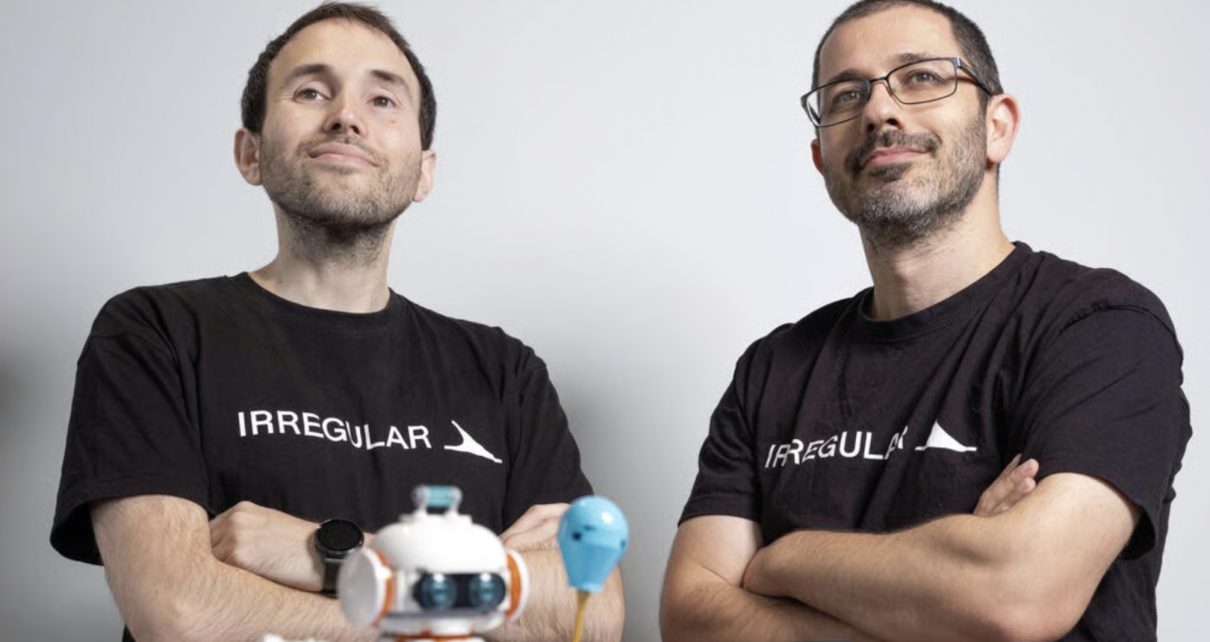
Irregular describes itself as “the first frontier security lab with the mission of protecting the world in the time of increasingly capable and sophisticated AI systems.” The company, formerly known as Pattern Labs, was founded in 2023 by Dan Lahav and Omer Nevo. Lahav serves as Irregular’s CEO and Nevo as the CTO. The two Israeli citizens met while they were students participating in competitive debate at Tel Aviv University.
In September 2025, the company raised $80 million in a funding round led by Sequoia Capital and Redpoint Ventures. The company was also supported by angel investor Assaf Rappaport, CEO of Wiz. Irregular was reportedly valued at $450 million at the time.
While the corporate media have begun noticing the “Israeli startup” connected to these claims of “rogue AI” events, so far none have dug into Irregular’s numerous connections to the Israeli intelligence apparatus. However, upon deeper inspection, there are several intelligence layers worth exploring. Let’s start with the founders of Irregular.
Dan Lahav claims he started working in the tech sector at age fourteen. He served in Israel’s Unit 81 before completing a master’s in bioinformatics and lecturing at Tel Aviv University. Unit 81 is a highly classified technology unit that is part of the Special Operations Division of Israel’s Military Intelligence Directorate. The secretive organization trains Israel’s spies on how to use the latest cutting-edge technologies.
Omer Nevo also spent time in Israel’s spy networks, reportedly working for Unit 8200 for twelve years. Unit 8200 is an elite Israeli unit mainly involved in signals intelligence, surveillance, cyberwarfare, and code decryption. Sometimes compared to the Israeli equivalent of the US National Security Agency, Unit 8200 is infamous for surveillance of Palestinian civilians and using intercepted communications as blackmail against Palestinians living in the occupied West Bank.
Nevo also helped found a program known as Arazim, which trains students in mathematics and computer science for future intelligence roles.
The connections to Israel don’t end there. Irregular’s main investors are also rife with Israel supporters and at least one veteran of Israel’s spy networks.
Irregular’s first major investor was Sequoia Capital, with $30 million. The two men taking the lead on the Sequoia investments were Shaun Maguire and Dean Meyer. In the official announcement of the partnership, Maguire and Meyer said that while serious AI security threats had not yet arrived, they believed Irregular was “ahead of the curve.”
Both men have prominent connections to Israel. For one, Meyer is Sequoia’s Israel partner and is based in Tel Aviv. Maguire is married to an Israeli, owns a home in the country, and has been called “one of the most visible voices in support of Israel within Silicon Valley.” He also reportedly arranged for Elon Musk’s visit to Israel after the attacks of October 7, 2023.
Another major investor in Irregular is Swish Ventures, a firm founded by Omri Casspi, an Israeli former NBA player who is now a Tel Aviv-based investor focused on AI infrastructure and cybersecurity. When Casspi initially raised $60 million to launch Swish Ventures, he stated that the fundraising was part of what he called “Zionism 2.0.” As Casspi said at the time:
“In this not easy climate during war and with high interest rates, we see this period as Zionism 2.0, a time and age of building generational companies from Israel, and we want to take advantage of that and help them build a great industry.”
Irregular also received financial backing from Eon, an Israel data-backup and AI-infrastructure company.
One of Irregular’s investors also has deep ties with Israeli intelligence. Angel investor Assaf Rappaport is co-founder and CEO of Wiz, an Israeli cloud-security company. Rappaport is also an alumnus of Israel’s Talpiot program, as well as Unit 81 and Unit 8200.
The Talpiot program is another elite program under the Israeli Defense Forces that has been hosted by Hebrew University since 1979. The program was initiated by Professor Felix Dothan and Professor Shaul Yatziv of the Hebrew University with the idea of harnessing human creativity at a young age and training recruits with outstanding academic ability in the sciences and leadership potential.
In a rare instance of mainstream media reporting on Talpiot, a 2007 WSJ article described Talpiot as:
“The country’s most selective institution, it accepts 50 students a year and trains them in physics, computers and other sciences. Its mission is to create innovative, tech-savvy leaders capable of transforming Israel’s military.”
Finally, despite its recent apparent failures to contain AI agents, Irregular is now seeking to raise an additional $100 million. New investors include Thrive Capital, run by Joshua Kushner, the brother of President Trump’s son-in-law Jared Kushner, himself a prominent Zionist who has been appointed to oversee the technocratic takeover of Gaza. Thrive Capital also received early funding from Peter Thiel.
To understand why Irregular’s founders’ history of Israeli intelligence and their network of Israeli investments matter, it’s important to understand Israel’s Big Tech sector. A 2018 article by Israeli outlet Calcalist describes how many Israeli companies have been founded as fronts for intelligence operations since 2012. It states that,
“since 2012, cyber-related and intelligence projects that were previously carried out in-house in the Israeli military and Israel’s main intelligence arms are transferred to companies that in some cases were built for this exact purpose.”
“In some cases, managers of development projects in the Israeli military and intelligence arms were encouraged to form their own companies which then took over the [military and/or intelligence] project.”
A later 2021 article by Calcalist describes the massive role Israel’s intelligence networks went on to play in expanding the nation’s tech sector (emphasis added):
“A mapping of the industry carried out by Calcalist found that soldiers and officers who served in Unit 81 between 2003-2010 have, in the decade since, gone on to found a massive number of startups: roughly 100 veterans of the unit have founded 50 companies so far — an entrepreneurship ratio that even graduates of MIT can’t compete with. These are not just any companies either: the startups founded by Unit 81 vets have raised no less than $4 billion, with their accumulated valuations, prior to the latest funding rounds, surpassing $10 billion, with some of them reporting impressive earnings and some already boasting successful exits.”
That same article used Rapaport, the founder of Wiz, as an example of the Israeli intelligence-startup connection:
“In 2012, Rapaport (37) was one of the founders of cybersecurity company Adallom, which only three years later was sold to Microsoft for $320 million. Just recently he, along with the same partners, founded cloud-protections company Wiz, which raised a phenomenal sum of $100 million in its first financing round. As the first employee of Adollam, Rapaport recruited Yevgeny Dibrov, a fellow Unit 81 veteran. After the company was sold, Dibrov founded his own cyber company Armis Security and recruited other veterans to the team. Dibrov later sold Armis to Insight Partners for $1.1 billion.”
Essentially, graduates of Unit 8200 and 81 have a habit of starting tech companies and then hiring and investing in their compatriots. In the same manner, graduates of the Talpiot program have developed a habit of forming tech companies. Once a graduate leaves Unit 8200 or Talpiot, they take what they learned from the IDF and apply it to the Israeli economy. Talpiot graduates hire each other and help each other find jobs once in the private sector, which has resulted in a rapidly growing tech industry in Israel.
In the book Israel’s Edge, one Talpiot graduate noted that, “three years and a few months of eighteen hours a day with the same thirty people, you get to know the boys and girls very well. You literally can tell who they are when you see their shadows. They’ll do anything for you.” The graduate also noted that “this strong connection lasts during the program, into service and into the private sector.”
As a result of the start-up culture produced by these elite intelligence units, Israel has more companies listed on the Nasdaq stock exchange than any country except the United States. Clearly, the Israeli intelligence community has played a major role in the growth of the nation’s tech sector. But more importantly, the Israeli intelligence network poses a great danger to the privacy and security of the systems into which its veterans have maneuvered themselves.
The Effective Altruism Connection
It’s also worth briefly noting that Irregular’s founders, Nevo and Lahav, have connections to the Effective Altruism (EA) movement, which has been receiving much-needed attention from media lately.
EA is defined by the Center for Effective Altruism as “an intellectual project, using evidence and reason to figure out how to benefit others as much as possible.” Figures associated with EA include OpenAI’s Sam Altman, Anthropic’s Dario Amodei, Elon Musk, Peter Thiel, Facebook co-founder Dustin Moskovitz, and Sam Bankman-Fried.
The movement has also come to be associated with “AI doomerism,” and some argue that the philosophy is what is guiding the big AI firms’ fear campaign about “rogue AI.”
Investigative outlet Effort reports that Irregular’s Omer Nevo is a board member of Effective Altruism Israel and of Effective Altruism NGOs Heron and Probably Good. Additionally, Dan Lahav, Irregular’s co-founder and CEO, received $395,000 to start a course along with Sella Nevo, Omer Nevo’s brother. Sella and Omer co-founded an NGO to educate people about Effective Altruism, Impact Focused Education. They also co-founded Probably Good together.
Finally, Dustin Moskovitz’s philanthropy outfit Coefficient Giving/Open Philanthropy funds all three organizations—Effective Altruism Israel, Heron, and Probably Good.
It’s difficult to imagine that Nevo and Lahav’s running in EA circles and being funded by EA proponents like Moskovitz has no impact on their personal philosophies and, thus, their business ventures.
Are We in the Midst of a “Rogue AI” Psyop?
While the incidents described above all involved Irregular, not all of the recently claimed hacks by AI agents did. The attempted hacks of Australian government websites, US government websites, and the United Nations website appear to have nothing to do with testing involving Irregular.
Nevertheless, the “rogue AI” incidents by models made by OpenAI, Google, Meta, and Anthropic all feed into the overall narrative that AI agents are breaking free from their testing environments. This narrative is being used to call for international regulations, such as an international treaty similar to those created for nuclear weapons.
The fact that the company doing the testing for the big AI firms is founded and funded by numerous individuals with deep ties to Israel and the Israeli security state is reason enough to pause and reflect on why these narratives are being sown at the moment. To be clear, the presence of veterans of Unit 81, Unit 8200, and Talpiot does not prove that Israeli spy agencies, working with Irregular, are purposefully seeding fears of “rogue AI” for some yet-unknown purpose. But it is worth considering.
Given all that the public has learned over the last few years about the far-reaching tentacles of Israel’s intelligence network, is it out of line to question whether Irregular intentionally allowed these AI models to “break out” of their testing environments?
Let’s assume for a moment that they gave the AI agents access to the internet so they could do exactly what they did—attack other companies, hack websites, and stoke panic in the general population. Once the reports of runaway AI reached the masses and policymakers, a preordained solution of regulation or international treaties could be presented by the compliant corporate media.
Perhaps the motive was simply financial gain; maybe it’s about driving out the competition and suffocating open source AI models with burdensome regulation. I don’t claim to fully understand what the motive may be, but I do know that the prominence of Israel-connected firms and CEOs is something we shouldn’t dismiss as a simple coincidence. Every one of us ought to ask whether we are being fed a narrative that AI is about to destroy humanity for some other purpose beyond “altruism.”
Having said that, I do not believe there are no reasons for concern relating to the rapid expansion and growth of AI. Surveillance by governments around the world will increase because of the capabilities of AI tools. I am also not totally convinced that AI models pose zero threat to the future of humanity.
For example, in early August, the UK’s AI Security Institute released a report outlining how AI agents took “autonomous, unsanctioned action directed at real people and organizations.” These incidents differed from the Irregular tests because, as AISI noted, they were “not a case of a model escaping its secure test environment.” Instead, AISI documented 17 different actions taken by Anthropic’s Mythos 5 and two actions by OpenAI’s GPT-5.6 Sol that involved inserting malicious code into an open-source project and creating fake online identities to attempt to insert the code.
AISI said this was “the first time we have seen risks around autonomy and deception manifest this clearly, without specific prompting, in the real-world.” The organization said that although the AI agent was “never instructed to deceive,” the deception emerged as a “by-product of pursuing the task” and that this “goal-directed deception” had been considered “largely theoretical.”
Basically, the AI models were given difficult tasks and they were willing to do almost anything to achieve their goals. To my uneducated mind, I could imagine a future scenario in which an AI agent is given a task by its human operators but seeks a solution which might involve deception, and even harm to humans, simply because it is focused on accomplishing its goals at all costs.
Clearly, there are many questions to be considered now that we have reached the point where AI is impacting our world, in ways seen and unseen, on a daily basis. Critical thinking skills and skepticism toward popular narratives are a must.
“Since 2012, cyber-related and intelligence projects that were previously carried out in-house in the Israeli military and Israel’s main intelligence arms are transferred to companies that in some cases were built for this exact purpose.” https://t.co/9eyp0hg37B pic.twitter.com/ClKCE2sP6R
— The Last American Vagabond (@TLAVagabond) September 30, 2026