
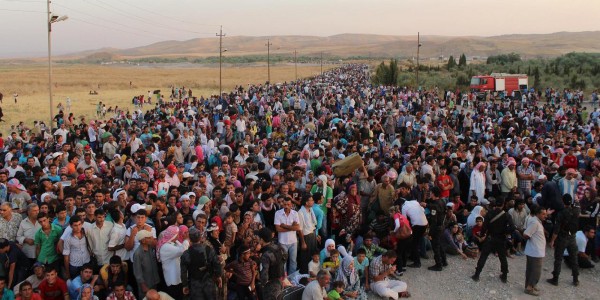
Since the recent attacks in Paris over Friday the 13th, the refugee crisis has escalated to a gravity that can be felt in every western household, with a vast majority of the credit belonging to the Plutocratic Mainstream Media. This is not to say that the attackers didn’t play their own intrinsic role, but rather to illustrate how the Mainstream Media will cut, copy, and paste any stories into the Collective Consciousness that suits its agenda. There are few Americans who can recall the assault by al-Shabab militants at Garissa Univeristy in Kenya, in April 2015; leaving 147 people dead. Still some are hard-pressed to recall even the recent ISIS bombings in Beruit on November 12th, and far too few individuals are bothering to discuss the secret drone assassination program—with its own private court system of high-ranking officials—that the Obama Administration has paved the way for.
 The discussed equivalency between these three concepts (as mentioned above) is this: they are not part of the Mainstream Media’s Plutocratic agenda. This agenda (which is multi-faceted and not something that will be discussed here in whole) has decided that these attacks in Paris are pertinent because of their nature in the refugee crisis, and the timing of the event in terms of geopolicy. Now, in lieu of Paris, the refugee crisis has catapulted to the center of the U.S. Presidential debates, and become one of the primary focuses and frustrations of most Americans, with an overwhelming majority of citizens reacting in hostility and fear towards these refugees—not without reason either. However, this article aims to have neither a “pro” nor “anti” refugee aid approach, and rather its direction is to describe the complexities of the questions at hand, and the nature of the hard answers that will have to be discovered—one way or the other.
While it still might be hard for some Americans to understand, this article will operate under the postulation of Plutocratic Shadow Government, which is merely a matter of the money trail that funds politicians. It is not to suggest that any of these names can be directly linked to the refugee crisis itself, but to show the money trail that funds American politicians, as well as others. Names involved in this plutocracy are families like Rockefeller, Rothschild, Taft, Goodyear, Disney, Bush, Du Pont, Koch and Hapsburg, along with others not mentioned that are said to reside in even higher echelons (some names of which are still unknown). It should also be stated that none of this is insider information, and can be found throughout all the corners of the internet if one should have an eye for it.
 When discussing this money-trail linked to corporate America and American politics, it should be mentioned that in the business world, money given is attached with incentive. This incentive, in regards to the refugee crisis, is what Professor Kelly Greenhill describes as “coercive engineered migration” (CEM), and maps out the political phenomenon in her book, “Weapons of Mass Migration” that spans well over three hundred pages of detail. This is not what some would call a “conspiracy theory book,” but rather extremely reputable resource material, and the title actually won the “2011 International Studies Association Best Book Award.” Nor does the book discuss anything radical like plutocracies or shadow governments, and is actually a highly detailed political analysis of CEM; the data set beginning at the UN refugee convention of 1951, leading up to 2010 when the novel was released.
The statistics in this body of work are vast, and many are astounding to say the least. From the beginning to the end of this data set, Greenhill noted that CEM was enacted 1.0 times a year on a geopolitical scale, and uses this to support her hypothesis that CEM is more effective than described on paperwork, and that politicians are well aware of this. Weaponized Migration (which CEM is a form of) is considered a highly risky situation that requires a considerable amount of Machiavellianism to pull off. It entails either the acceptance of an innumerable amount of variables or the Intel capable of putting the entire situation on lockdown, which is something that currently seems to be impossible (and what many alternative researchers may or may not call a New World Order/Big Brother surveillance state). In the fifty-six cases of CEM determined by Greenhill, the instigators of these cases “achieved at least some of their objectives approximately 72 percent of the time (in forty-one cases).”
 She goes on further to illustrate a stricter statistic of the same data, excluding partial campaign successes and only recording complete successes of any given CEM’s documentation. “…coercers got more or less everything they reportedly sought 57 percent of the time (in thirty-two cases).” To further analyze this data set with a descriptive context provided by Greenhill, there are two “distinct but non-mutually exclusive” classifications that can be considered punishment strategies, whether the punishment be directed at another political administration, citizens, or otherwise. These classifications are “capacity swamping” and “political agitation.” Capacity Swamping can be considered to be a manipulation of the ability of “targets to accept/accommodate/assimilate” the specified group of refugees. Political Agitation is the manipulation of the willingness of these same targets to accept/accommodate/assimilate these same refugees. The fine line between the two descriptions makes all the difference, and what can be proposed of the Syrian Refugee Crisis is that this is a classic example of Political Agitation.
Another distinct note about the history of weaponized migration provides an interesting context that might be difficult for some to contextualize: the fact that liberal democracies with humanitarian axioms provide a dualistic context in policy that is the perfect breeding ground for CEM. This dualism brings about a division of conscience within the citizens—those who feel the need to protect themselves, and those who feel the need to preserve all innocent life—and this is called “heterogeneity,” which can simply be defined as “divisive, or “other.” Taken from the research, “…as levels of normative and political liberalism rise (and policy autonomy declines) the aggregate vulnerability of a state also rises…” American “romance with the Statue of Liberty has always been a hot and cold affair,” meaning that despite the fact that American liberty is attributed to its liberal-progressive politics (in the generalized definition, with no context to specific political parties), these type of political structures are the most susceptible to coercion on a statistical level; specifically speaking, they are susceptible to CEM( the European Union was noted as a close second).
Though this might seem like a philosophical inconsistency, this is merely the inherent representation of the potentiated physics required for situations to occur—the equal and opposite reaction; the inherent price of autonomous liberty is having to share it with others. Greenhill goes on to state, of the West in general, that “…the burden borne by Western liberal democracies represents but a small share of the world’s total displaced population, yet flows into the West are considered disproportionately threatening relative to their size.” She continues to say, “Within these states, pundits, politicians, and even some policymakers argue that migrants who are from different religious, linguistic, and ethnic backgrounds than the majority in their newly adopted homelands are a danger to societal security.” Traditional nationalist ideologists regularly assert that refugees bring down the nation’s standard of life, create crime through poverty that is much more difficult to track due to refugee litigations, as well as bringing their own ethnic and cultural predicaments and tensions to their place of emigration. It is also noted in Greenhill’s work, that at the beginning of World War II, Jewish emigration to the U.S. was largely rejected, to the objection of few Americans at first.
Another crucial point that the professor makes is the usefulness of media-regulated social “norms” that are employed during these times to help initiate or guide the CEM. The article proposes that the attacks in Paris have been employed by the media for this matter. To further elaborate, social norms are usually regulated by “costs being imposed by norms-adherent actors on those who routinely violate them” and in the context of CEMs, it is proposed that the reverse of this boomerang-type effect is happening, stating that “norms-violating actors seek to impose costs on those who left to their own devices generally aim to adhere to them.” This means that through the dualism of liberal democracies, the CEM-instigators will use an inverted self-regulated norm—this suggests that nationalism is the standard norm (which is the mindset of holding one’s own nation in the highest regard; something that is indeed quite standard) and that in order to effectively utilize CEM, this social norm of nationalism must be subverted so that the flow of the CEM may flow unimpeded. A final piercing comment on the subject is worth quoting:
“Norms, just like human beings, can be wielded as coercive weapons, and they can be wielded in the service of beneficent and altruistic goals, as well as self-serving and immoral ones.”
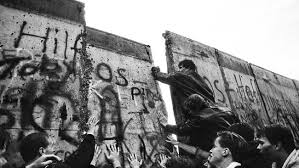 For historical context, Greenhill further suggests that the “non-spontaneous” tidal wave of Eastern German refugees to the West was an instrumental practice of weaponized migration in order to help bring the Berlin Wall down, and notes that most of the armed conflict in the post-Cold War period was due to forms of weaponized migration. Recent practices of CEM include the European Union’s lifting of its last sanction against Libya, so that the country would assist in the Northern African refugee flux in 2004. For more statistics and the full list of history’s documented attempts at Weaponized Migration, Greenhill’s entire research novel, “Weapons of Mass Migration“ (which is the only body of work on the subject so far) is highly recommended. It very much seems like a moral imperative to lend humanitarian help towards helpless victims seeking political refuge, but from this detailed analysis of coercive-engineered-migration it is beginning to look like the classic comic-book situation of the villain kidnapping someone useful and close to the hero, relying on the assumption that the hero’s altruistic nature will be his assurance at an attempt to save the victim at the hero’s own expense.
As far as geopolitics are concerned, it is disconcerting to think that this refugee crisis might be a ploy by the “villain” to draw in the “hero.” Due to this type of context, it seems that the only assurance that citizens are given here is that this is going to be a difficult situation to handle either way. Perhaps, what might be the two decisions left at hand are, A: letting the refugees fend for themselves in a helpless situation, or B: dealing with further erosion towards collapse of the western cultural infrastructure, which will likely lead to more warfare before it collapses.
A final note on the subject might be important to display here, and this is that the refugee crisis affecting all citizens is the direct result of America’s “War on Terror” declared after 9/11. With this crisis already well under way, and no appealing options to work with, many cannot help but wonder why this war is still in effect. However, some still argue that this is the exact reason for this weaponized migration—that the American public has reached its limit of ambiguous war, and the only way to resolve this massive refugee crisis and secure “American liberty” will be a call to arms—a war to resolve the situation. In the end, only time will tell.



Interesting that I came across this article after 7 years of this being published. And I can’t deny things are any different now. Humans have devised such sophisticated guidelines, that we are slowly forgetting that its not just about us in this world. The earth is dying.