Israel is currently spearheading an online disinformation campaign against Iran with the intent of creating civil unrest. Agent provocateurs on the ground have weaponized peaceful protests to turn the situation violent. Across social media, AI-generated images and dated riot footage are being used to claim that a revolution has begun, as US President Donald Trump threatens military intervention.
On June 13, 2025, Israel launched the 12-Day War of aggression against the Islamic Republic of Iran, which the US directly entered on the 22nd. As a result, 610 Iranians were murdered in the attack, most of them civilians.
On July 7, 2025, Axios reported that Israeli officials were already considering another attack and that they believed Donald Trump would back it. As Tel Aviv’s rhetoric against Iran continued to escalate over the following months, alongside a coordinated push from pro-war Washington-based think tanks, reports began to emerge on the eve of Israeli Prime Minister Benjamin Netanyahu’s visit to Mar-a-Lago that he would request the US to attack Iran on his behalf.
When it came to the Israeli attack on Iran, most reports do not mention that the majority of Tel Aviv’s actions were carried out by Iranian agents on the ground. Even the initial wave of Israeli airstrikes—which were overall the most effective portion of its offensive and resulted in the killing of dozens of Iranian generals and nuclear scientists, and damage to nuclear facilities—had a large component carried out on the ground.
According to Israel’s Channel 13 News, at the start of the 12-Day War in June 2025, the Mossad deployed approximately 100 foreign operatives into Iran. These agents installed and operated heavy missile systems that had been smuggled into the country. Their mission was to target Iranian ballistic missile launchers and air defense batteries. This highly-coordinated operation—described as the largest ever conducted by the Mossad in Iran—was critical to neutralizing Tehran’s air defenses during the initial strikes.
Then, throughout the war, Iranian operatives working on behalf of the Israelis were used to carry out armed attacks using drones and guided missiles, detonated explosives, assisted in locating targets, and even burned tires to create the impression of larger Israeli air attacks than actually occurred.
From the first day of the war, Benjamin Netanyahu publicly called on the Iranian people to rise up and overthrow their government. Alongside the Israeli prime minister, their puppet Reza Pahlavi—the son of the deposed Dictator, Shah Mohammad Reza Pahlavi—appeared repeatedly to urge a revolt in Iran and claimed that the government was on the verge of collapse, though he was unable to mobilize even small crowds to protest in his favor.
The Shah’s son, who was given the title “Crown Prince of Iran,” has no formal position of power and leads no widespread movement beyond limited support among some monarchists in exile. He made his first public visit to Israel in April 2023, where he was hosted by Israeli officials.
Following the visit, he received prominent coverage in Western corporate media, often referred to uncritically as “Crown Prince.” Yet the messaging around this manufactured leader makes little sense, as he seeks to return to a hereditary monarchy where he would rule as dictator, while also claiming to turn Iran into a democracy.
In October of 2025, the Israeli newspaper Haaretz exposed an Israeli-run influence campaign that employed Persian speakers and a network of bot accounts in an attempt to boost Reza Pahlavi, who lacked the organic support needed to install him in power.
The same investigation revealed that these Israeli-funded accounts were used around the time of the 2022 protests in Iran, and were particularly amplified during the 12-Day War. According to the report, researchers from the University of Toronto’s Citizen Lab found that the online network disseminated deepfake videos and fabricated content during Israel’s airstrikes on Tehran’s Evin Prison.
Following the war, Iranian authorities announced the arrest of thousands of Israeli-employed agents throughout the country and cracked down on countless weapons production facilities set up inside the nation.
Israel’s Latest Fake Revolution In Iran
On December 28, 2025, peaceful protesters took to the streets in Iranian cities, including Tehran, Isfahan, and Kerman, among others. Shopkeepers and merchants demonstrated against their government’s mismanagement of the economy, which has led to a deepening of the ongoing inflation crisis in the country.
Labor protests, such as those by workers, are not uncommon in Iran due to economic pressures. These kinds of protests are quite routine in the Islamic Republic, as Iran allows demonstrations, and such protests will frequently lead to reforms and resignations of government officials. For example, on December 9, 2025, thousands of petroleum contract workers at the South Pars gas complex protested and were backed by local unions in doing so. In fact, the demonstration was recorded as larger in size than any of the protests that started on December 28.
This time, however, Israeli and Iranian opposition accounts across social media began pushing old videos of riots to claim that a major uprising was occurring. During the first days of the protests—which were backed by major unions inside Iran—a few instances of agent provocateurs attempting to stir trouble were recorded, along with chants calling for the fall of the government. Yet the shopkeepers even forced these hostile elements out of their demonstrations.
Despite the absence of major social unrest and the demonstrations being almost entirely non-violent, a propaganda campaign online depicted a reality entirely different from the one unfolding on the ground. This became particularly evident when Israel’s former Prime Minister Naftali Bennett uploaded a video declaring support for the alleged Iranian uprising, signaling that the situation was likely to escalate.
As the New Year dawned, the situation suddenly deteriorated when armed agitators opened fire on security forces and attempted to storm government buildings, armories, and police stations. On January 1, two Iranian police officers were murdered, and three rioters were also reportedly shot dead. Videos began emerging of protesters lighting police officers on fire and another incident occurred where rioters beat, stabbed, and kicked a security officer in the head, who is allegedly now in a coma.
The violent incidents on January 1 were almost entirely taking place in western Iran, particularly in the ethnic-minority province of Lorestan. However, on social media, the pro-Israel Iranian opposition media were promoting disinformation about uprisings in Tehran and the overthrow of the government.
For example, the popular Iranian-opposition channel called “Tousi TV”, published a livestream titled, “BREAKING: Iranians Take CONTROL Of IRGC Police Stations – Revolution In Iran.” Not only had no police stations been taken over anywhere in the country, but the livestream was simply an interview with Israeli propagandist Emily Schrader.
Tousi TV even posted on X (formerly Twitter) a “breaking” news update stating “IRGC Forces Flee Iranian Cities – Khamenei Leaves Tehran,” both of which were completely false. Meanwhile, pro-Israel Iranian diaspora voices, such as Goldie Ghamari, posted non-stop about an alleged nationwide “uprising,” fantasizing about an Iran without the religion of Islam, spreading outlandish, often anti-Muslim disinformation.
The next day, a new wave of violent attacks on security forces occurred, along with an attempt to storm another armory in Marvdasht. Other incidents included lone arsonists setting fire to cars in Qom, as well as armed attacks and small groups of violent agents throwing stones at police officers. In one case, a group of six armed assailants executed a member of Iran’s Basij volunteer paramilitary force.
By January 2, all the major unions that had originally supported the peaceful protests issued statements denouncing the wave of unrest and riots.
It is important to consider that these protests, at the present moment, have no popular participation. If we compare what is currently happening to the major protests of 2022 or 2019, for example, there were public statements issued and planned protest locations in attempts to draw large numbers to the streets. This time, it is the opposite: suddenly lone-wolf attacks occur out of nowhere, or small groups of rioters—ranging from 3 to 50 members—show up and create chaos.
There are some larger protests occurring across Iran, but most do not become violent, resulting only in clashes caused by agent provocateurs. No popular slogans even exist to drive these riots. Some of the protests include economic concerns, other areas enjoy support of separatist factions, still others simply chant for the fall of the government, and occasionally someone posts a video mentioning the Shah’s son.
Israel’s official Persian language account on X even created a fake AI image of Iranian police using a water cannon on a protester, in a desperate attempt to generate outrage.
While there is no disputing that Israeli and other foreign intelligence agencies were involved in the unrest in 2022, the slogan of “Woman, Life, Freedom” clearly resonated with many, as the central cause of women’s rights had certainly captured the imaginations of portions of the Iranian public. In this instance, no uniting theme like that exists.
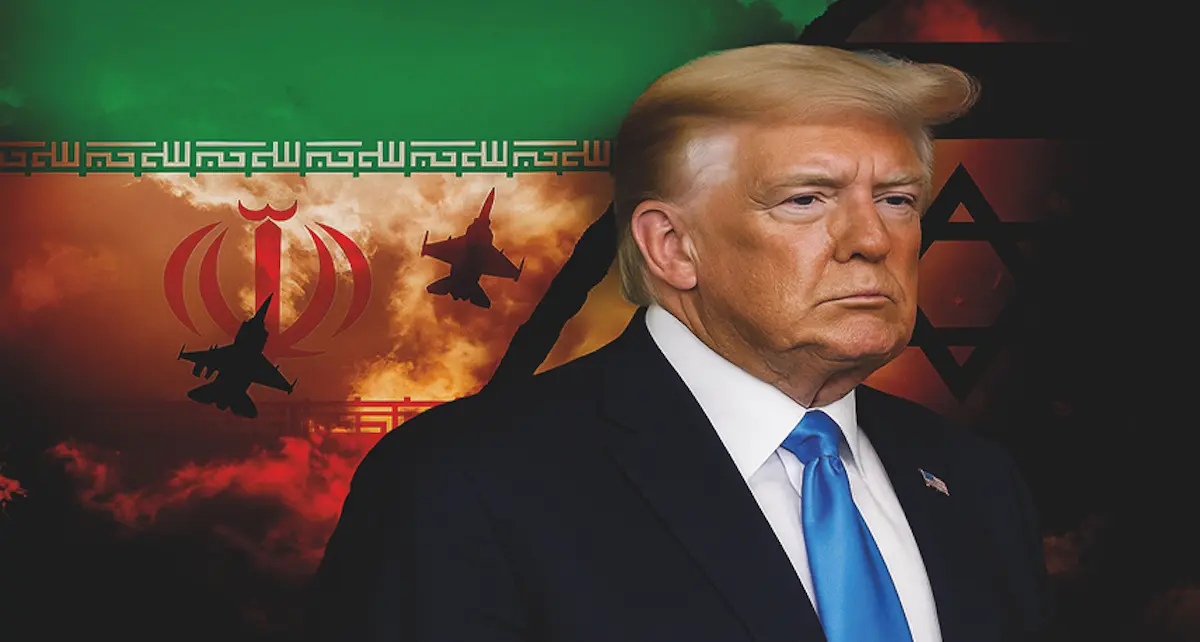
Yet none of this appears to matter to Donald Trump, who issued a direct threat of military intervention against Iran. The poorly worded statement published on Truth Social came right as Benjamin Netanyahu arrived back in Tel Aviv, after Israeli media reported that their Premier had secured every demand from the American President.
It is clear that the events unfolding in Iran are not organic and are not comparable to previous rounds of unrest. This appears to be solely an intelligence operation aimed at creating widespread instability across the country. If Israel’s goal is to attack Iran again, it likely recognizes that in the previous round of protests, it failed to ignite such social unrest—which is why this may be part of its broader war strategy.